
Personality Conflicts Are Actually Communication Gaps
"They just don't get along"
Every small business owner has said it at some point. Two good employees, both capable, both committed, and somehow every interaction between them turns into friction. The easy explanation is personality: one is too blunt, the other is too sensitive, and that's just how they are.
Here's the thing, personality differences are real, but they're rarely the actual problem. The problem is that people don't understand each other's styles, so they misread each other's intent. A direct coworker gets labeled rude. A careful one gets labeled slow. Personality conflicts are usually communication gaps in disguise, and the good news is that communication gaps can be fixed.

Why We Blame Personality
Calling something a personality conflict feels like a diagnosis. In reality, it's a dead end. Personality sounds permanent, so once a conflict gets that label, everyone stops trying to solve it. Managers avoid putting the two people on the same project. Teammates tiptoe around them. The tension quietly spreads.
Saying "they clash" means no one has to look at unclear roles, mixed messages from leadership, or processes that set people up to step on each other's toes. Blaming personality lets the system off the hook.
But when you dig into the details of a conflict, you almost always find something concrete underneath: a missed handoff, an assumption nobody voiced, an expectation one person had and the other never heard.
The Real Culprits: Five Common Communication Gaps
1. Unspoken expectations.
One employee thinks "ASAP" means within the hour. The other thinks it means by end of day. Neither is wrong, but each walks away convinced the other is unreliable or pushy.
2. Different communication styles.
Some people get straight to the point. Others build context first. A direct communicator can come across as cold; a thorough one can come across as rambling. The message gets lost behind the delivery.
3. The wrong channel.
A quick question sent as a formal email feels like a reprimand. A serious concern dropped in a group text feels dismissive. Tone travels poorly in writing, and people fill in the blanks with the worst interpretation.
4. Missing or delayed feedback.
When small frustrations go unsaid, they pile up. By the time someone finally speaks up, it comes out as a blowup, and the other person is blindsided by months of resentment they never knew about.
5. Unclear roles and ownership.
When two people both think they own a task (or both think the other does), conflict is almost guaranteed. What looks like a turf war is often just a missing conversation about who is responsible for what.
How to Spot the Gap
Before you write off a conflict as a personality clash, talk to each person separately and get specific. These questions help surface what's really going on:
What exactly happened? Ask for a specific example, not a general complaint like "she's always difficult."
What did you expect to happen instead? This often reveals the unspoken expectation.
How did you find out? Was it an email, a comment in a meeting, a secondhand report? The channel matters.
Have you told them this directly? Often the answer is no.
Who do you think owns this task or decision? Compare answers. If they don't match, you've found your gap.
You'll usually notice the two stories describe the same event very differently. That difference is the communication gap, and it's your starting point.
Use Personality Assessments as a Shared Language
One of the fastest ways to close these gaps is to give your team words for their differences. A workplace personality or communication style assessment (tools like DISC are a popular starting point) helps each person see how they naturally work, communicate, and make decisions, and how their coworkers do too.
The point isn't to put people in boxes or excuse bad behavior. It's to replace guesswork with understanding! Once a team knows that one person is wired for speed and results while another needs detail and time to process, a lot of "attitude problems" suddenly make sense.
Train Your Team to Translate, Not Change
An assessment on its own is just a report. The real value comes from team training that walks through the different styles together and shows people how to work with each one.
Take the blunt employee. In a good session, they get to say it out loud: "Just because I'm direct doesn't mean I don't like you. I'm direct because that's how I get things done." And the coworker who has been taking it personally finally hears that the short emails were never meant as criticism.
That works both ways. The direct communicator learns that a little context or a quick "thanks" helps their message land. The relationship-focused teammate learns to hear the message without assuming bad intent. No one has to become a different person. They just learn to translate.
Good style training should help employees:
Recognize their own style and how it comes across to others
Read the intent behind different styles instead of reacting to the delivery
Adjust how they communicate depending on who they're working with
Ask for what they need ("Can you give me the bottom line first?") without it feeling personal
How to Close the Gap
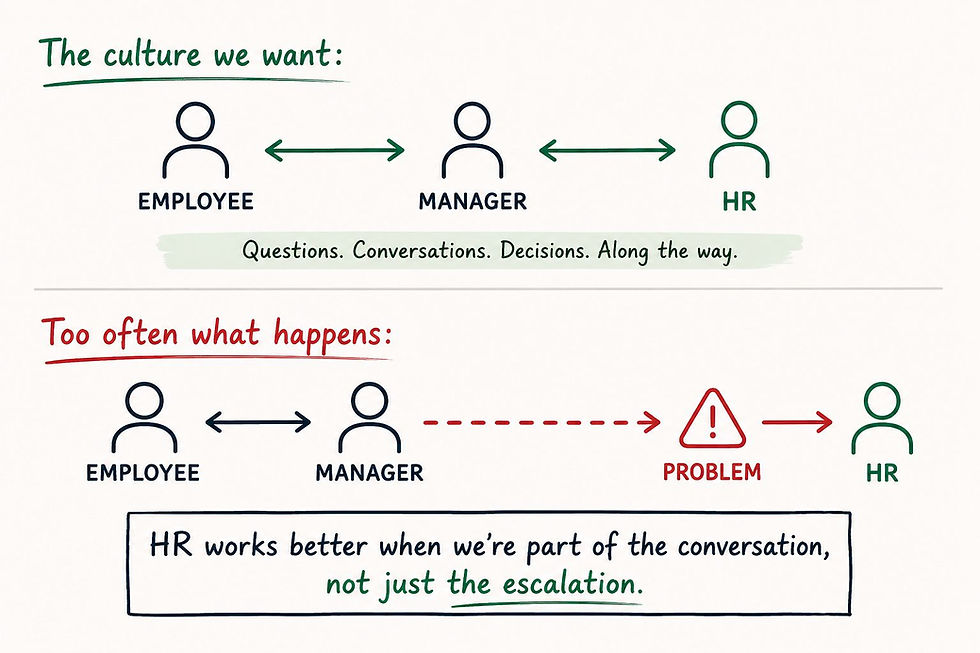
You don't need a big HR department to fix communication problems. A few consistent habits go a long way:
Bring them together with a structure.
Meet with both employees and focus on a specific situation, not character. Use "Here's what happened, here's how it landed" instead of "You always."
Define the terms.
Agree on what "urgent," "done," and "ASAP" actually mean on your team. Write it down.
Clarify roles in writing.
Updated job descriptions and a simple responsibility chart prevent most ownership disputes before they start.
Set channel norms.
Decide what goes in email, what goes in a quick message, and what deserves a face-to-face conversation. Make it a rule that concerns are raised in person or by phone, not in writing.
Build in regular check-ins.
Short one-on-ones give small frustrations a place to go before they become big ones.
Train managers to coach, not referee.
Your supervisors set the tone. Equip them to facilitate conversations instead of picking sides or avoiding the issue entirely.
Follow up.
Check back in two to four weeks. Communication habits take repetition to stick.
When It Really is Something More
Not every conflict is a misunderstanding. If you hear about harassment, discrimination, threats, or behavior that violates company policy, that isn't a communication gap to coach through. It needs to be documented and addressed through your formal policies, and possibly investigated.
The same goes for an employee who keeps repeating the same behavior after clear, documented conversations. At that point, it's a performance issue, and it should be handled like one. Knowing the difference protects your people and your business!!
The Bottom Line
When you reframe a "personality conflict" as a communication gap, you turn something that feels permanent into something you can actually fix. Clear expectations, defined roles, and a team that understands each other's styles will solve more workplace tension than any amount of avoiding the problem.
At Bright HR Solutions, we help small and mid-sized businesses across DFW build teams that work well together, from personality and communication style assessments and team training to clear job descriptions, policies, and manager coaching. If conflict is slowing your team down, let's talk. Reach out to schedule a conversation with our team!


Comments